The Sunshine Vitamin Nobody Talks About Enough
Let’s be honest — most of us don’t wake up in the morning wondering if our vitamin D levels are doing okay. We worry about our coffee being hot enough, our inbox being empty enough, and our to-do list being manageable enough. Vitamin D? That barely registers on the daily mental checklist.
And yet, this one nutrient quietly influences almost every system in your body. It’s not just about bones, though that’s the reputation it’s stuck with from decades of milk carton marketing. Vitamin D is technically a hormone, and it acts like a master regulator—dipping its fingers into immune function, mood regulation, muscle performance, cardiovascular health, and even how well your cells communicate with each other.
Here’s the uncomfortable truth: vitamin D deficiency is staggeringly common. Depending on which study you look at, anywhere from 35% to 80% of adults worldwide have insufficient levels. In some populations—older adults, people with darker skin, those who live at higher latitudes, and office workers who barely see daylight—the numbers climb even higher. We’re talking about a silent epidemic that most people don’t know they’re part of.
The tricky part? Vitamin D deficiency doesn’t announce itself with a neon sign. It whispers. It sends subtle, easy-to-dismiss signals that most of us attribute to stress, poor sleep, aging, or just “one of those weeks.” By the time the signs become loud enough to notice, your levels have often been tanking for months.
That’s exactly why this article exists. We’re going to walk through ten early warning signs that your body might be running low on vitamin D — not the dramatic, end-stage symptoms, but the quiet, everyday clues that show up first. More importantly, we’ll talk about what you can actually do about it, because awareness without action is just anxiety in a prettier package.
So grab your coffee (or your green smoothie, no judgment here), and let’s figure out whether your body has been trying to tell you something.
1. You’re Tired All the Time, and Sleep Doesn’t Fix It
We all have days where exhaustion feels like a second skin. But there’s a difference between “I stayed up too late binge-watching” tired and the bone-deep fatigue that lingers no matter how many hours you log in bed.
If you’re getting seven to nine hours of sleep and still waking up feeling like you’ve been hit by a truck, vitamin D deficiency might be one of the culprits. Research has consistently linked low vitamin D levels to fatigue that doesn’t resolve with rest. One study published in the North American Journal of Medical Sciences found that patients with low vitamin D often reported severe fatigue that significantly improved after supplementation.
Why does this happen? Vitamin D plays a role in mitochondrial function — those tiny power plants inside your cells that produce energy. When D levels drop, your cells literally struggle to generate the ATP (adenosine triphosphate) that fuels everything you do, from thinking to walking to digesting lunch. It’s like trying to run a factory on half the usual electricity.
There’s also a connection to sleep quality itself. Vitamin D receptors are found in areas of the brain that regulate sleep, and some studies suggest that low levels are associated with poorer sleep efficiency and more nighttime awakenings. So not only do you have less energy production, but you might not be sleeping as deeply either — a double whammy that leaves you dragging through your days.
What to do about it: Start by honestly evaluating your sleep hygiene. Are you scrolling on your phone until midnight? Is your room too warm or too bright? Fix the basics first. But if you’ve optimized your sleep environment and still feel perpetually drained, ask your doctor for a 25-hydroxyvitamin D blood test. It’s a simple draw, and it will tell you exactly where you stand. If you’re deficient, supplementation often brings a noticeable energy boost within a few weeks.
2. Your Mood Has Taken a Nosedive (Especially in Winter)
Have you ever noticed that you feel more down, irritable, or anxious during the darker months? There’s a reason “winter blues” is such a common phrase, and vitamin D is deeply intertwined with that pattern.
Vitamin D receptors are scattered throughout the brain, including in areas involved in mood regulation like the hippocampus and prefrontal cortex. It’s also involved in the synthesis of serotonin, one of your brain’s primary feel-good neurotransmitters. When vitamin D is low, serotonin production can dip — and that’s a well-established pathway to low mood.
The research backs this up. Multiple studies have found correlations between low vitamin D levels and depression, particularly seasonal affective disorder (SAD). A meta-analysis published in the British Journal of Psychiatry concluded that low vitamin D levels are associated with a significantly increased risk of depression. It’s not necessarily that vitamin D deficiency causes depression in every case — mental health is far too complex for that — but the relationship is strong enough that it should be on your radar.
What makes this sign particularly sneaky is that we normalize feeling “a little off.” We blame work stress, relationship friction, world events, or just the general grind of adult life. We don’t stop to ask whether our biology might need support.
What to do about it: If your low mood is severe, persistent, or accompanied by thoughts of self-harm, please reach out to a mental health professional immediately—vitamin D is not a replacement for proper care. That said, if you’re experiencing mild to moderate mood dips, especially seasonally, getting your vitamin D checked is a smart move. Light therapy boxes can also help, particularly if you live in a region with long winters. And don’t underestimate the power of a daily walk outside, even when it’s cold — natural light exposure, even on cloudy days, supports both vitamin D production and circadian rhythm regulation.
3. Your Bones Ache, or You’re Getting Frequent Stress Fractures
This is the classic vitamin D symptom, and for good reason. Vitamin D’s most famous job is calcium absorption. Without adequate D, your gut can’t absorb calcium efficiently from food, no matter how much dairy you consume. The result? Your body starts pulling calcium from your bones to maintain blood levels, weakening your skeleton over time.
But here’s what most people miss: you don’t have to have full-blown osteoporosis to feel the effects. Early deficiency often shows up as a vague, diffuse bone pain—a deep achiness that’s hard to pinpoint. It might feel like growing pains you never grew out of or a heaviness in your legs and lower back that worsens after activity.
Athletes and active people should pay special attention here. Stress fractures—tiny cracks in bones caused by repetitive force—are increasingly common in people with low vitamin D, even young, otherwise healthy individuals. A study on college athletes found that those with vitamin D levels below 40 ng/mL had a significantly higher risk of stress fractures. Your bones might look fine on an X-ray, but they’re not as resilient as they should be.
What to do about it: If you have persistent bone pain or a history of stress fractures, get your vitamin D and calcium levels checked together — they work as a team, and you need to know the status of both. Weight-bearing exercise (walking, resistance training) helps stimulate bone formation, but only if you have the raw materials to build with. Supplementation should be guided by your blood levels — more on dosing later — but ensuring you’re getting enough dietary calcium (from food, not just supplements) is equally important.
4. Your Muscles Feel Weak or You’re Getting Cramps
Muscle weakness and vitamin D deficiency go hand in hand, and the mechanism is fascinating. Vitamin D receptors are present in skeletal muscle tissue, and the nutrient appears to influence muscle protein synthesis, muscle cell growth, and the efficiency of muscle contractions.
When levels are low, you might notice that your muscles tire more quickly during workouts or that everyday activities—climbing stairs, carrying groceries, getting up from a chair—feel harder than they used to. Some people experience frequent muscle cramps or a sensation of heaviness in their limbs.
This isn’t just an inconvenience for gym enthusiasts. In older adults, vitamin D-related muscle weakness is a major risk factor for falls and fractures. The quadriceps—the large muscles on the front of your thighs—seem particularly sensitive to low vitamin D, and weakness here directly impacts balance and stability.
What to do about it: Resistance training is one of the best things you can do for muscle health at any age, but pair it with adequate vitamin D for maximum benefit. If you’re experiencing unexplained weakness, rule out other causes (thyroid issues, neurological conditions, and medication side effects) with your doctor, then address your D status. Many people report that their strength and endurance improve noticeably once their levels normalize.
5. You’re Getting Sick More Often Than Usual
Your immune system is a complex, beautifully orchestrated defense network — and vitamin D is one of the conductors. Immune cells, including T-cells and macrophages, have vitamin D receptors and need the nutrient to function optimally.
When vitamin D is adequate, it helps regulate immune responses: ramping up defenses against pathogens when needed and calming inflammation when the threat is gone. When it’s low, that balance gets disrupted. You might find yourself catching every cold that goes around, taking longer to recover from infections, or experiencing more frequent respiratory issues.
This connection became particularly relevant during the COVID-19 pandemic, when multiple studies observed that people with vitamin D deficiency had worse outcomes from respiratory infections. While vitamin D is not a cure or guaranteed prevention, maintaining adequate levels appears to support robust immune function — and that’s valuable whether we’re talking about seasonal colds, flu, or other respiratory viruses.
What to do about it: If you’re sick more often than your friends or colleagues, don’t just chalk it up to bad luck. Get your vitamin D tested, especially if you also have other symptoms on this list. In addition to supplementation, focus on immune-supporting basics: adequate sleep, stress management, regular movement, and a nutrient-dense diet. Vitamin D works best as part of a holistic approach, not a magic bullet.
6. Your Wounds Are Healing Slowly
Cut yourself shaving and notice it’s still angry and red days later. Or maybe a simple scrape that should have scabbed over quickly is taking its sweet time? Slow wound healing can be an early sign that your vitamin D levels are suboptimal.
Vitamin D plays a role in several stages of wound healing. It helps regulate the inflammatory response (which, paradoxically, is necessary for healing to begin), supports the formation of new skin tissue, and influences the production of compounds that fight infection at the wound site. Research has shown that people with diabetic foot ulcers — notoriously difficult to heal — often have lower vitamin D levels, and supplementation has been explored as an adjunct therapy.
This sign is easy to overlook because most minor wounds do eventually heal, even when vitamin D is low. But if you’re noticing a pattern where your body seems slower to repair itself than it used to be, it’s worth investigating.
What to do about it: For any wound that’s not healing, especially if you have diabetes or circulation issues, see a healthcare provider to rule out serious complications. For generally slow healing paired with other deficiency signs, get your vitamin D checked. Topical vitamin D preparations have been studied for wound healing in some contexts, but oral supplementation to correct deficiency is the foundational approach.
7. You’re Losing Hair (And It’s Not Just Genetics)
Hair loss is one of those topics that send people into a spiral of anxiety, and rightfully so—our hair is deeply tied to identity and self-image. While genetics (male and female pattern baldness) and hormonal shifts are common culprits, severe vitamin D deficiency has been linked to certain types of hair loss, particularly alopecia areata, an autoimmune condition where the immune system attacks hair follicles.
Research has found that people with alopecia areata tend to have lower vitamin D levels than those without the condition. The mechanism likely involves vitamin D’s role in immune regulation and its direct effects on the hair growth cycle. Hair follicles are active mini-organs, and like other tissues, they need adequate nutrients to function.
It’s worth noting that not all hair loss is tied to vitamin D. Telogen effluvium — a common type of temporary shedding triggered by stress, illness, or major life changes — usually resolves on its own. But if your hair loss is patchy, severe, or accompanied by other symptoms on this list, vitamin D status is a worthwhile piece of the puzzle.
What to do about it: If you’re experiencing significant hair loss, see a dermatologist to determine the type and cause. Ask to have your vitamin D (and iron, thyroid hormones, and other relevant markers) checked as part of the workup. While correcting a deficiency won’t reverse genetic pattern baldness, it may help if your hair loss has an autoimmune or nutritional component. Be patient, though — hair growth cycles are slow, and it can take months to see changes after correcting a deficiency.
8. You Have Chronic Pain That Doesn’t Have a Clear Cause
Chronic pain is a beast—it’s isolating, exhausting, and often comes with a frustrating diagnostic journey. While vitamin D deficiency is far from the only cause of chronic pain, it’s an underrecognized contributor that’s worth investigating, especially when standard tests come back normal.
Vitamin D deficiency has been associated with various pain conditions, including chronic lower back pain, musculoskeletal pain, and even fibromyalgia-like symptoms. The proposed mechanisms include effects on muscle function, bone health, nerve sensitivity, and inflammatory processes. Some studies have found that vitamin D supplementation reduces pain scores in people with deficiency-related pain, though results are mixed and likely depend on the underlying cause.
What makes this particularly relevant is how often chronic pain patients are dismissed or told “everything looks normal.” If you’re in that boat—living with pain that doesn’t have a tidy diagnosis—your vitamin D status is a modifiable factor that’s easy to check.
What to do about it: Work with a healthcare provider to thoroughly evaluate chronic pain — don’t self-diagnose. But as part of that evaluation, request a vitamin D test. If you’re deficient, correcting it may reduce pain, or it may simply eliminate one variable from a complex picture. Either way, it’s information worth having. Also consider working with a physical therapist, as movement and strength training can be powerful tools for many types of chronic pain.
9. You’re Experiencing Brain Fog or Difficulty Concentrating
Brain fog isn’t a medical diagnosis, but anyone who’s experienced it knows exactly what it means: that frustrating feeling where your thoughts feel slow, your memory is glitchy, and focusing on tasks requires way more effort than it should.
Emerging research suggests vitamin D plays a role in cognitive function. Vitamin D receptors are found in the hippocampus (critical for memory) and other brain regions involved in learning and executive function. Some studies have linked low vitamin D levels to poorer cognitive performance, and there’s active research into whether deficiency is a risk factor for dementia and Alzheimer’s disease.
The mechanism isn’t fully understood, but it likely involves vitamin D’s anti-inflammatory effects, its role in neurotransmitter synthesis, and its support of vascular health in the brain. Chronic low-grade inflammation — which vitamin D helps regulate — is increasingly recognized as a contributor to cognitive decline.
Brain fog has many potential causes (poor sleep, stress, hormonal changes, medication side effects, and other nutrient deficiencies), so don’t assume vitamin D is the answer. But if you’re experiencing mental cloudiness alongside other signs on this list, it’s a clue worth following.
What to do about it: Rule out other common causes of brain fog first — sleep quality, stress levels, hydration, blood sugar stability, and other nutrient deficiencies (especially B12 and iron). Get your vitamin D tested, and if you’re low, work on correcting it. Many people report clearer thinking within weeks of starting supplementation. Also prioritize activities that support brain health: regular aerobic exercise, social connection, mentally stimulating activities, and a Mediterranean-style diet rich in omega-3s and antioxidants.
10. You Have Risk Factors — Even Without Symptoms Yet
This last point is crucial: you might not have obvious symptoms yet, but if you have risk factors for vitamin D deficiency, your levels could be quietly declining. Catching it early, before symptoms develop, is the best-case scenario.
Major risk factors include:
- Limited sun exposure: If you work indoors, live at a high latitude, consistently use sunscreen (which is important for skin cancer prevention but blocks vitamin D synthesis), cover your skin for cultural or religious reasons, or simply spend most of your time inside, your natural vitamin D production is compromised.
- Darker skin: Melanin reduces the skin’s ability to produce vitamin D from sunlight. People with darker skin need significantly more sun exposure to generate the same amount of vitamin D as lighter-skinned individuals, putting them at higher risk for deficiency, especially in less sunny climates.
- Age: As we get older, our skin becomes less efficient at producing vitamin D, and our kidneys are less effective at converting it to its active form.
- Body weight: Vitamin D is fat-soluble and can get sequestered in adipose tissue, making it less available for use. People with obesity are more likely to have lower circulating vitamin D levels.
- Certain medical conditions: Malabsorption disorders (celiac disease, Crohn’s disease, cystic fibrosis), kidney or liver disease, and some weight-loss surgeries can impair vitamin D absorption or activation.
- Medications: Some drugs, including certain anticonvulsants, glucocorticoids, and HIV medications, can affect vitamin D metabolism.
- Dietary restrictions: If you follow a strict vegan diet and don’t supplement, you’re at higher risk because most natural dietary sources are animal-based (fatty fish, egg yolks, fortified dairy).
What to do about it: If you have one or more risk factors, consider getting your vitamin D levels checked proactively, even if you feel fine. Prevention is always easier than correction. If testing isn’t accessible, a conservative daily supplement (discussed below) is generally safe for most adults, but personalized guidance from a healthcare provider is ideal.
What to Do About It: A Practical Action Plan
Okay, so you’ve recognized some signs, or you know you have risk factors. What now? Let’s break this down into actionable steps.
Step 1: Get Tested
The only way to know your vitamin D status for sure is a blood test measuring 25-hydroxyvitamin D [25(OH)D]. This is the standard test and reflects your body’s vitamin D stores.
Reference ranges vary slightly by lab, but generally:
- Deficient: <20 ng/mL (<50 nmol/L)
- Insufficient: 20–29 ng/mL (50–72 nmol/L)
- Sufficient: 30–50 ng/mL (75–125 nmol/L) — this is the target range for most people
- Potentially toxic: >100–150 ng/mL (250–375 nmol/L) — very rare, usually from extreme over-supplementation
Don’t guess. Testing removes the ambiguity and allows for targeted treatment.
Step 2: Understand Your Sunlight Strategy
Your skin produces vitamin D when exposed to UVB rays. The amount you need depends on your skin tone, latitude, time of year, time of day, and how much skin is exposed.
General guidelines:
- Light skin: About 10–30 minutes of midday sun exposure on arms and legs, several times per week, may be sufficient in summer months.
- Darker skin: May need 30 minutes to several hours to produce the same amount.
- Latitude and season: Above 37 degrees latitude (roughly north of Los Angeles or Atlanta), UVB intensity drops significantly in winter, making synthesis difficult or impossible for months.
The sunscreen dilemma: Sunscreen blocks UVB and reduces vitamin D synthesis. However, dermatologists strongly recommend daily sunscreen use to prevent skin cancer and premature aging. A practical compromise: get brief, unprotected sun exposure for vitamin D production (if appropriate for your skin type and risk factors), then apply sunscreen for prolonged exposure. Never burn — that’s a clear sign of DNA damage.
Step 3: Optimize Your Diet
While it’s difficult to get enough vitamin D from food alone, dietary sources contribute to your total intake:
- Fatty fish: Salmon, mackerel, sardines, and herring are the richest natural sources. Wild-caught salmon can provide 600–1,000 IU per serving.
- Cod liver oil: A powerhouse, with about 1,300 IU per tablespoon. It’s also high in vitamin A, so don’t overdo it.
- Egg yolks: About 40–50 IU per yolk, though pasture-raised hens exposed to sunlight produce eggs with higher levels.
- Fortified foods: Milk, plant-based milks, orange juice, and cereals often have added vitamin D. Check labels — amounts vary.
- Mushrooms: Exposed to UV light, some mushrooms (like maitake and UV-treated portobello) can provide significant vitamin D2.
Step 4: Choose the Right Supplement
For most people, supplementation is the most reliable way to maintain adequate vitamin D, especially in winter or for those with risk factors.
Types of vitamin D:
- Vitamin D3 (cholecalciferol): Derived from animal sources (lanolin from sheep’s wool) or lichen (vegan). More effective at raising blood levels than D2.
- Vitamin D2 (ergocalciferol): Plant-derived. Less potent but suitable for vegans if D3 from lichen isn’t available.
Dosing considerations:
- Maintenance dose for most adults: 1,000–2,000 IU (25–50 mcg) daily is commonly recommended and generally safe.
- If deficient: Your doctor may recommend higher doses (2,000–10,000 IU daily, or weekly high-dose regimens) for 8–12 weeks, followed by a maintenance dose. Always do this under medical supervision.
- Upper safe limit: 4,000 IU (100 mcg) daily for adults without medical monitoring. Higher doses should be guided by blood tests.
Important: Vitamin D is fat-soluble, so take your supplement with a meal containing some fat for better absorption.
Step 5: Consider Co-Factors
Vitamin D doesn’t work in isolation. Several nutrients support its function and your overall bone health:
- Magnesium: Required for vitamin D activation. Many people are also magnesium-deficient. Good sources: nuts, seeds, dark leafy greens, dark chocolate, legumes.
- Vitamin K2: Helps direct calcium to bones rather than arteries. Found in fermented foods, cheese, egg yolks, and natto. Some supplements combine D3 with K2.
- Calcium: The mineral vitamin D helps you absorb it. Prioritize food sources: dairy, fortified alternatives, leafy greens, and sardines with bones.
- Zinc: Supports immune function and works synergistically with vitamin D. Sources: meat, shellfish, legumes, seeds.
Step 6: Retest and Adjust
After starting supplementation, retest your levels in 8–12 weeks. This tells you whether your dose is appropriate. Some people need more than expected due to absorption issues, weight, or genetic variations in vitamin D metabolism. Others need less. Personalization is key.
A Word of Caution: More Isn’t Always Better
It’s tempting to think that if some vitamin D is good, a lot must be great. Resist that urge. Vitamin D toxicity (hypervitaminosis D) is rare but real, and it causes hypercalcemia—too much calcium in the blood—which can lead to nausea, vomiting, weakness, kidney stones, and, in severe cases, kidney damage and abnormal heart rhythms.
Toxicity generally occurs from prolonged, very high-dose supplementation (typically 10,000+ IU daily for months without monitoring), not from sun exposure or food. Your body has feedback mechanisms that prevent an overdose from the sun—you’ll start burning before you overproduce vitamin D.
The takeaway: supplement wisely, test periodically, and work with a healthcare provider if you’re taking high doses.
The Bottom Line
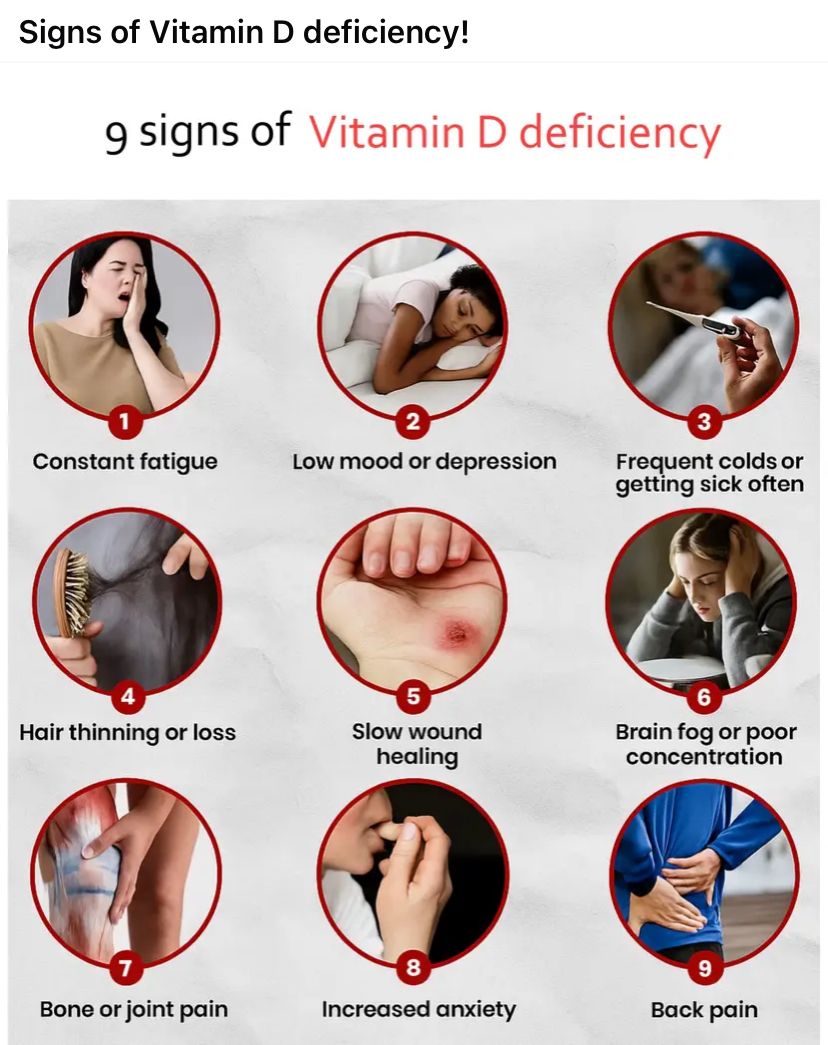
Vitamin D deficiency is one of those health issues that hides in plain sight. Its early warning signs—fatigue, low mood, bone pain, muscle weakness, frequent illness, slow healing, hair loss, chronic pain, and brain fog—are so common and nonspecific that we usually blame something else. And sometimes it is something else. But given how widespread deficiency is and how simple the fix can be, it’s worth ruling out.
Think of vitamin D as a foundational nutrient. When it’s adequate, it supports everything else you’re doing for your health — your workouts, your sleep hygiene, your stress management, your nutrition. When it’s low, it creates subtle friction that makes everything else harder.
The good news? Testing is easy, supplementation is affordable, and correction often brings noticeable improvements in how you feel. You don’t need to obsess over it, but you do need to pay attention.
So here’s my challenge to you: if you recognized yourself in multiple signs on this list, or if you have several risk factors, make the call. Schedule that blood test. Ask the question. Your future self — the one with more energy, clearer thinking, better mood, and stronger bones — will thank you.
Because at the end of the day, health isn’t about perfection. It’s about paying attention to the signals your body sends and responding with curiosity rather than dismissal. Vitamin D might just be the first clue in a larger story about how to feel genuinely well.
Now go get some sunshine—or at least schedule that test.