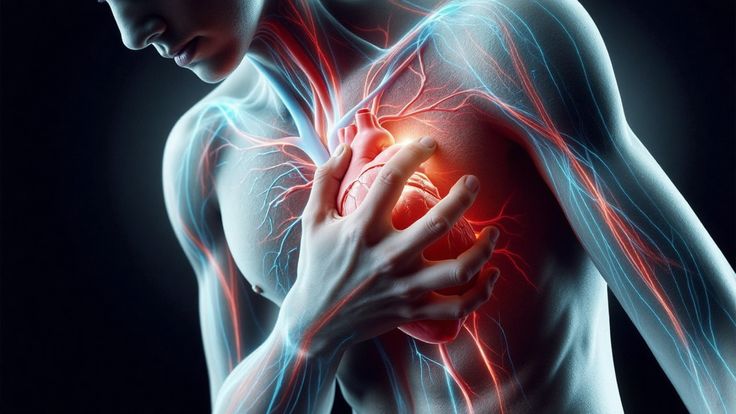
Before anything else in this article: if you’re currently experiencing chest pain or any of the symptoms described below and you’re not certain what’s causing them, call 911 or your local emergency number now. This article can help you understand the patterns that distinguish a panic attack from a heart attack, but it is not a diagnostic tool, and emergency physicians themselves say these two conditions can be genuinely difficult to distinguish without medical testing. When in doubt, the correct move is always to seek emergency care, not to work through a checklist first.
With that established, this is one of the most common, and most genuinely frightening, moments in medicine: a sudden wave of chest tightness, a racing heart, trouble breathing, sweating, and a creeping sense of dread. Each year, more than 800,000 Americans have heart attacks, but tens of millions more experience panic attacks, and the two can feel remarkably alike in the moment. Emergency medicine physicians openly acknowledge that the symptom overlap between panic attacks and heart attacks is substantial enough that medical evaluation and testing, such as an EKG and blood work, is often genuinely necessary to tell them apart with confidence. This article walks through what’s actually known about the patterns that tend to differ between the two, the risk factors that shift the odds one way or the other, the symptoms that specifically deserve attention in women (who are more likely to be misdiagnosed or sent home during an actual heart attack), and the clear bottom-line guidance for what to do when you’re not sure.
Why These Two Conditions Feel So Similar
It helps to understand that the symptom overlap isn’t a coincidence — it reflects two very different underlying problems that both heavily involve the body’s stress response.
A heart attack (myocardial infarction) happens when blood flow to part of the heart muscle is severely reduced or completely blocked, usually because a coronary artery has narrowed from plaque buildup or become acutely blocked by a clot. The heart muscle, starved of oxygen, sends pain and distress signals, and the body’s sympathetic nervous system—the fight-or-flight system—activates strongly in response, producing sweating, a racing heart, and often profound anxiety.
A panic attack is a sudden, intense episode of fear or anxiety, also driven by the fight-or-flight response, but triggered by the nervous system itself rather than by any actual blockage or damage in the heart. The physical sensations—chest tightness, rapid heartbeat, shortness of breath, sweating, and dizziness—are produced by the same adrenaline-driven physiological cascade, even though nothing is structurally wrong with the heart. As one anxiety specialist has put it, a panic attack is a real alarm system going off—it’s just responding to a smaller, non-life-threatening trigger rather than a genuine fire.
This shared physiological pathway is exactly why the symptoms can feel so convincingly similar and why even people without any anxiety history can find themselves seriously unsure, in the moment, which one they’re experiencing.
Patterns That Tend to Differ (With Real Caveats)
Multiple medical institutions point to a similar cluster of distinguishing patterns. These are genuinely useful — but they are tendencies based on typical presentations, not hard rules that apply to every single case, and several major medical centers explicitly caution that there’s substantial overlap and individual variation.
Onset and Buildup
Panic attacks tend to come on suddenly and reach their peak intensity within minutes. Heart attack symptoms, by contrast, more often begin gradually and intensify progressively over a longer stretch of time, though they can also be sudden and intense, particularly in more severe cases—so this distinction, while a useful general pattern, isn’t absolute.
Duration
This is one of the more consistently cited differences: panic attack symptoms typically fade within roughly 20 to 30 minutes, often resolving largely on their own or with calming techniques. Heart attack symptoms, in contrast, tend to persist, worsen, or come in waves, and critically, they do not resolve on their own without medical treatment. If chest pain or related symptoms last more than a few minutes, worsen, or don’t improve with rest, the guidance from multiple medical institutions is consistent and direct: call 911 right away rather than waiting to see if it passes.
Character and Location of Pain
Heart attack discomfort is often described as a squeezing, crushing, or heavy pressure—sometimes likened to a vise or an elephant sitting on the chest—and it frequently radiates outward to the arm (especially the left arm), jaw, neck, shoulder, or upper back. Panic attack chest discomfort, by contrast, is more commonly described as sharp or stabbing and tends to stay localized to the chest rather than radiating to other areas. That said, this distinction isn’t airtight either — some heart attacks present with milder, more localized discomfort, and pain radiating to the arm has also been reported in some panic and anxiety presentations, which is part of why this single clue alone isn’t considered sufficient for self-diagnosis.
Triggers
Panic attacks are often, though not always, set off by a specific stressful situation, thought, or trigger, and some people have a known personal history of recurring panic attacks tied to certain circumstances. Heart attacks can occur for no apparent external reason at all and are also frequently associated with physical exertion specifically—climbing stairs, shoveling snow, or other physical strain—since this is exactly when the heart’s oxygen demand increases against an already-narrowed or blocked artery. A cardiac event brought on by physical exertion, rather than emotional stress, is a meaningful pattern worth noting.
Response to Calming Techniques
If you have a known history of panic attacks and you try sitting down, breathing slowly, or using a familiar calming technique, and the symptoms genuinely ease within several minutes, that response is more consistent with a panic attack. Heart attacks, by definition, do not resolve through breathing exercises or calming strategies—they require actual medical intervention to restore blood flow. This can be a genuinely useful piece of information for someone with an established, previously diagnosed pattern of panic attacks—but it is not a safe test to rely on if you have any uncertainty, any cardiac risk factors, or no prior panic attack history, since waiting to see if calming techniques work, when they don’t, costs valuable time during an actual heart attack.
Age and Personal History
Emergency physicians point to age and prior history as among the most useful practical predictors available outside of formal testing: people younger than 40, especially those who are otherwise healthy and have a documented history of previous panic attacks, are statistically more likely to be experiencing a panic attack. Middle-aged and older adults, and anyone with pre-existing coronary artery disease or significant cardiac risk factors, are statistically more likely to be experiencing a genuine cardiac event when these symptoms appear. This is a probability-shifting factor, not a guarantee in either direction—heart attacks absolutely do happen in younger, healthy-seeming people, and panic attacks absolutely do happen in older adults.
A Side-by-Side Summary
| Feature | More Typical of Panic Attack | More Typical of Heart Attack |
|---|---|---|
| Onset | Sudden, peaks within minutes | Often gradual, builds over time (can also be sudden) |
| Duration | Usually resolves in 20–30 minutes | Persists, worsens, or comes in waves; doesn’t resolve alone |
| Pain quality | Sharp, stabbing | Squeezing, crushing, heavy pressure |
| Pain location | Tends to stay in the chest | Often radiates to arm, jaw, neck, shoulder, or back |
| Trigger | Often a specific stressor or thought | Can occur with exertion or with no clear trigger |
| Response to calm-down techniques | Often eases with breathing/calming strategies | Does not resolve with calming techniques |
| Typical age/history | Under 40, prior panic attack history | Middle-aged/older with cardiac risk factors |
The Critical Exception: Heart Attack Symptoms in Women
This deserves its own dedicated section because it’s a documented, serious gap in public and even clinical awareness. Heart disease is the leading cause of death for women in the United States, yet women are more likely than men to be sent home from the emergency room while actually experiencing a heart attack — partly because the medical understanding of “classic” heart attack symptoms was built predominantly around how men typically present.
Women do experience the classic crushing chest pain pattern, just somewhat less frequently than men do. Research comparing symptom presentation has found that a large majority of women with confirmed heart attacks report symptoms typically labeled “atypical”—including dizziness, sweating, shortness of breath, vomiting, palpitations, fainting, back pain, and fatigue—at meaningfully higher rates than men.
Specific symptoms that deserve real attention in women, particularly if new, sudden, or worsening, include:
- Profound, sudden fatigue — not ordinary tiredness, but an exhausted feeling that doesn’t improve with rest and makes normal activities feel unexpectedly draining
- Shortness of breath, sometimes occurring without prominent chest pain at all
- Nausea, indigestion-like discomfort, or vomiting
- Upper back, shoulder, or jaw pain or pressure — sometimes described as a band or rope tightening around the upper back
- Cold sweats or feeling unexpectedly clammy
- Lightheadedness or dizziness, especially if sudden or paired with any chest discomfort
- A sense of intense anxiety or impending doom—notably, this symptom itself overlaps with panic attack presentation, which only adds to the diagnostic difficulty
Part of why this matters so much practically: these symptoms are easy to misattribute to stress, poor sleep, the flu, acid reflux, or menopause-related changes—and women themselves, along with some clinicians, have historically been more likely to downplay or dismiss them as a result. If you’re a woman experiencing new, sudden, or worsening versions of any of these symptoms, treat them with the same seriousness as classic chest pain, and don’t let the absence of dramatic, textbook chest pressure talk you out of seeking care.
Shared Risk Factors Worth Knowing
Knowing your own baseline cardiac risk is one of the most useful pieces of context for interpreting symptoms in the moment, since it directly affects how the probability calculation discussed above applies to you specifically. Risk factors for heart attack include age (women 55 and older and men 45 and older face higher baseline risk), smoking, high blood pressure, high cholesterol, diabetes, obesity, physical inactivity, an unhealthy diet, and a family history of heart disease.
There’s also a genuinely important, somewhat counterintuitive connection worth knowing: research has found that people with anxiety disorders face an elevated risk of developing coronary artery disease over time, meaning a history of panic attacks doesn’t fully rule out elevated cardiac risk—it’s a “both things can be true” situation rather than an either/or. This is one more reason that a pattern of recurring chest symptoms, even in someone with a clear anxiety history, is worth discussing with a doctor rather than permanently filing under “just anxiety” without ever revisiting the question.
What Actually Happens at the Hospital (And Why That’s Reassuring, Not Scary)
Part of the anxiety around this question comes from not knowing what evaluation actually looks like. In practice, ruling out a heart attack is typically fast and well-established: an EKG (electrocardiogram) can often identify clear signs of a heart attack within minutes, and blood tests checking for cardiac enzymes (markers released when heart muscle is damaged) provide further confirmation or reassurance, sometimes within an hour or two. If these tests come back clear and your heart health checks out, but you experience intense physical symptoms accompanied by a wave of overwhelming fear, that combination is genuinely consistent with a panic attack—and that conclusion, reached through actual testing, is considerably more trustworthy than trying to self-diagnose in the moment based on symptom pattern alone.
This is worth internalizing because it reframes the choice: going to the emergency room to rule out a cardiac cause isn’t an overreaction or a waste of anyone’s time, even if it turns out to be a panic attack. It’s the appropriate, medically endorsed way to resolve genuine uncertainty about two conditions that even trained physicians say are difficult to distinguish without testing.
If You Determine It’s Likely a Panic Attack
For someone with an established history of panic attacks, once a cardiac cause has been medically ruled out on a prior occasion or genuinely doesn’t apply (no concerning risk factors, a clear personal pattern, symptoms that resolve with familiar techniques), some general anxiety management strategies can help during an episode: slow, deliberate breathing; grounding techniques that redirect attention to physical surroundings; reminding yourself that panic attacks, while intensely unpleasant, are not themselves dangerous and do pass; and removing yourself from an overstimulating environment if possible. If panic attacks are recurring and significantly affecting your life, evidence-based treatments, including cognitive behavioral therapy and certain medications, are genuinely effective, and a conversation with a doctor or therapist is a reasonable next step—both for treatment and to ensure a cardiac cause has been appropriately considered and addressed.
Other Associated Symptoms Worth Knowing
Beyond the core chest-pain comparison, a few additional symptoms commonly appear alongside both conditions and are worth understanding in their own right, since they sometimes show up as the most prominent complaint rather than chest pain itself.
Shortness of breath occurs in both conditions, but the underlying mechanism differs. In a panic attack, rapid, shallow breathing (hyperventilation) is part of the fight-or-flight response itself, and it can create a secondary sensation of not getting enough air, dizziness, and tingling in the hands or around the mouth—all of which are uncomfortable but not dangerous in isolation. In a heart attack, shortness of breath reflects the heart’s reduced ability to pump effectively when part of the muscle isn’t getting adequate blood flow, and it’s more likely to occur alongside other heart attack symptoms, or in some cases of women’s heart attacks, as a more prominent symptom even without strong accompanying chest pain.
A racing heart (tachycardia) is extremely common in panic attacks, sometimes reaching rates of 200 beats per minute or higher purely from the adrenaline surge, and this rapid rate itself can cause lightheadedness and a feeling of breathlessness, creating a self-reinforcing cycle of alarming physical sensations. A racing or irregular heartbeat can also occur during a heart attack, sometimes alongside dangerous heart rhythm disturbances, which is part of why heart rate alone, without other context, isn’t a reliable distinguishing feature.
Sweating is common to both, but cold, clammy sweating that occurs without an obvious heat or exertion trigger, especially alongside chest discomfort, is specifically flagged by cardiologists as a heart attack warning sign worth taking seriously rather than assuming it’s purely anxiety-driven.
A sense of impending doom is a recognized symptom of an actual heart attack—not just a description people apply afterward to a panic attack. This is precisely why “intense fear” alone cannot be used to distinguish the two conditions; both can produce overwhelming dread, and using the presence of fear itself as a tiebreaker doesn’t work, even though it’s tempting to assume “if I feel pure anxiety, it must just be anxiety.”
If This Is Your First Time Experiencing These Symptoms
A meaningful detail worth being explicit about: virtually every distinguishing pattern described in this article becomes considerably less reliable if you have no prior personal history of panic attacks. Someone with a well-established pattern of recurring panic attacks has a genuine frame of reference — they know what their own panic attacks tend to feel like, how long they last, and what helps. Someone experiencing intense chest symptoms for the very first time has no such reference point, and several medical sources are direct about this: without that personal history to draw on, you would not necessarily be able to distinguish a first panic attack from a heart attack using symptom pattern alone, no matter how carefully you’ve read about the differences in advance.
This isn’t meant to be alarming—it’s meant to clarify exactly when this article’s symptom comparisons are most useful (as context for someone with an established history or as general education) versus when they should be set aside entirely in favor of immediate medical evaluation (a first-ever episode, especially with any cardiac risk factors).
The Bottom Line
The patterns described in this article—onset speed, duration, pain quality and location, triggers, and response to calming techniques—are genuinely useful for understanding why these two conditions are so commonly confused, and they can inform how you think about your own risk and history over time. But they are probability-shifting patterns built on typical presentations, not a reliable substitute for medical evaluation in an acute moment, and multiple emergency medicine physicians are explicit that genuine certainty often requires testing that simply isn’t available outside of a medical setting.
The consistent, repeated message across every major medical institution covering this topic comes down to one clear instruction: when chest pain or related symptoms are new, severe, or persistent, or you’re simply not sure—especially if you have cardiac risk factors, no prior panic attack history, or you’re a woman experiencing symptoms like unusual fatigue, nausea, or upper back pain without classic chest pressure—call 911 or seek emergency care immediately. It is far better to be evaluated and learn it was a panic attack than to assume it’s “just anxiety” and delay care during an actual heart attack, when every minute matters for preserving heart muscle and improving outcomes.