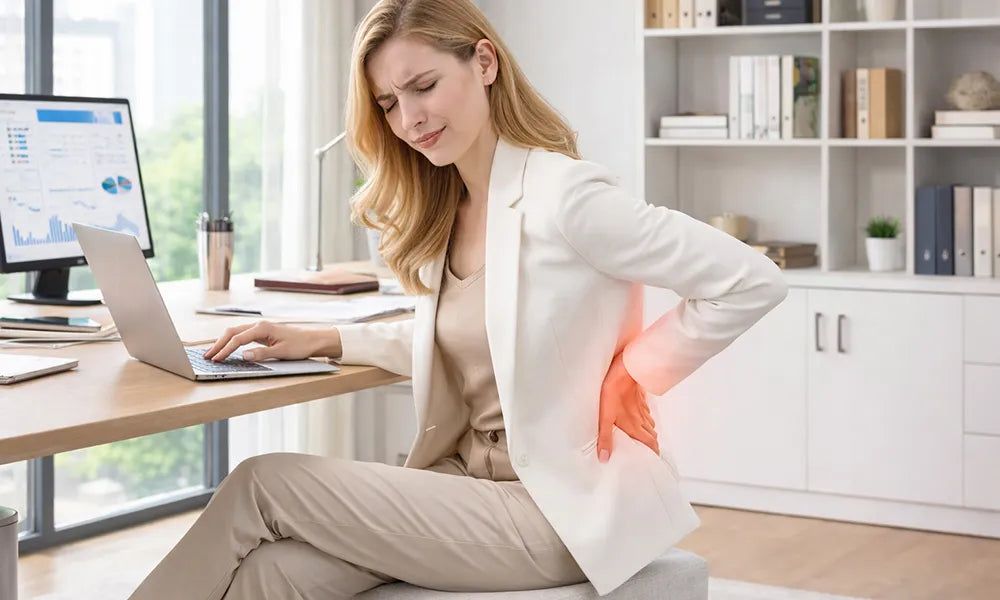
Lower back pain is one of the most common reasons people end up seeing a doctor, missing work, or quietly suffering through a week of moving more carefully than usual. The good news, backed by a fairly consistent body of clinical guidelines, is that the large majority of lower back pain is “non-specific”—meaning it isn’t caused by anything structurally serious—and tends to improve substantially within a matter of weeks with simple, largely self-directed care. The advice that actually works is also, refreshingly, less complicated than the supplement ads and miracle-cure content scattered across the internet would suggest.
This guide covers what current clinical practice guidelines actually recommend for acute low back pain, which stretches and home remedies have a reasonable evidence base behind them; what doesn’t help (and may even slow recovery); and—critically—the specific warning signs that mean home care isn’t the right call and you need medical attention instead.
First: When Home Care Is Not the Right Approach
This has to come before the stretches, not after, because a small percentage of low back pain is caused by something more serious, and clinical guidelines are explicit that screening for these “red flag” conditions comes before any self-management advice.
Seek emergency care immediately if you experience any of the following alongside back pain:
- New loss of bladder or bowel control, or the sensation of a full bladder that you can’t empty, or the inability to feel when you need to urinate or have a bowel movement
- Numbness in the “saddle” area—the inner thighs, buttocks, and genital/perianal region, the area that would touch a bicycle seat
- Progressive weakness or numbness in both legs, especially if it’s getting worse over hours
Together or individually, these can signal cauda equina syndrome, a rare but genuine emergency caused by compression of the nerve bundle at the base of the spinal canal. This is not a “wait and see” situation—these specific nerve roots control bladder, bowel, and leg function, and the window for preventing permanent nerve damage is measured in hours, not days. If you notice any of these symptoms, go to an emergency department and describe the specific symptoms clearly (bladder changes, saddle numbness, leg weakness) rather than just saying your back hurts.
See a doctor promptly, though not necessarily as an emergency, if you have:
- Back pain following a significant fall, accident, or other trauma
- Unexplained fever alongside back pain
- Unexplained weight loss alongside back pain
- A history of cancer
- Pain that is severe, constant, and not improved at all by rest or position changes (pain that wakes you at night unrelated to movement is a particular flag)
- Significant osteoporosis or long-term steroid use, given the elevated risk of compression fractures
- Back pain in the context of IV drug use, recent infection, or a weakened immune system, due to elevated infection risk
These aren’t meant to cause alarm—the overwhelming majority of low back pain has none of these features and falls squarely into the “manage it at home, expect meaningful improvement within weeks” category that the rest of this article addresses. But it’s worth knowing the short list of exceptions before diving into self-care.
What Current Clinical Guidelines Actually Recommend
Multiple major clinical practice guidelines for non-specific low back pain converge on a strikingly consistent, low-tech set of recommendations, and it’s worth knowing what they are before reaching for anything more elaborate.
Stay active — don’t rest in bed. This is probably the single most important, and most consistently repeated, piece of guidance across clinical recommendations: patients should be reassured that movement is safe and is, in fact, important to recovery and should be specifically advised to avoid bed rest. Decades of research have shifted clinical thinking away from the old instinct to lie still until the pain passes; prolonged bed rest is now understood to slow recovery and contribute to deconditioning, rather than help. Continuing with normal daily activities, modified as needed for comfort, consistently produces better outcomes than extended rest.
Heat can help and is specifically endorsed. Guidelines suggest considering the use of superficial heat as a reasonable, low-risk component of self-management for acute low back pain. A heating pad, warm bath, or hot water bottle applied to the lower back can ease muscle tension and reduce pain enough to support continued movement, which is itself part of the point.
Over-the-counter NSAIDs, used appropriately, are a reasonable option. A short course of oral NSAIDs (like ibuprofen or naproxen) at standard over-the-counter doses is commonly recommended for acute low back pain. As with any medication, following label dosing, being mindful of how long you’re using them, and checking with a pharmacist or doctor if you have any relevant health conditions (kidney issues, certain heart conditions, or a history of stomach ulcers) is the responsible approach.
Imaging usually isn’t needed early on, and that’s by design, not neglect. Clinical guidelines specifically discourage routine early imaging (X-rays, CT, or MRI) for low back pain without red flags, generally within the first four to six weeks. This often surprises people who expect a scan to be the first step, but the evidence actually points the other way—early imaging without a clear red flag indication hasn’t been shown to improve outcomes, and some research has even associated unnecessary early imaging with longer disability duration, possibly because incidental findings (very common on spinal imaging even in people with no pain at all) can sometimes increase anxiety and reduce confidence in moving normally.
Most acute low back pain has a genuinely favorable natural course. Guideline-based patient counseling specifically includes providing reassurance about the usual course of acute low back pain, since simply understanding that meaningful improvement within weeks is the norm — not the exception — measurably helps people stay engaged with active management rather than becoming fearful of movement.
Proven Stretches and Movements for Lower Back Pain Relief
With the safety framing and the broader guideline context established, here are specific stretches and movements with a reasonable evidence base or strong clinical-practice support for relieving non-specific lower back pain. As with any new stretch, move gently, stay within a pain-free or mildly uncomfortable range (sharp or worsening pain is a stop signal), and expect gradual rather than immediate results.
1. Knee-to-Chest Stretch
How to do it: Lying on your back with knees bent, bring one knee toward your chest, holding it with both hands for 20–30 seconds. Lower it slowly and repeat with the other leg, then try both knees together if comfortable.
Why it works: This gently stretches the lower back and glutes, helping to relieve tension built up in the lumbar region from prolonged sitting or muscle guarding around an irritated area.
2. Cat-Cow Stretch
How to do it: On hands and knees, alternate between arching your back upward like a cat (tucking your chin and pelvis) and dipping it downward like a cow (lifting your chest and tailbone). Move slowly between the two positions for 8–10 repetitions, coordinating the movement with your breath.
Why it works: This takes the entire spine through a gentle, controlled range of motion, which helps reduce stiffness and is widely used in physical therapy settings as a low-risk mobility exercise appropriate for most people with non-specific low back pain.
3. Child’s Pose
How to do it: Starting on hands and knees, sit your hips back toward your heels while reaching your arms forward and lowering your chest toward the floor. Hold for 20–30 seconds, breathing slowly.
Why it works: This provides a gentle, passive stretch through the lower back and hips without requiring active muscle engagement, making it a good choice when the area feels particularly irritated and a more active stretch feels like too much.
4. Piriformis Stretch (Figure-Four Stretch)
How to do it: Lying on your back with knees bent, cross one ankle over the opposite knee. Gently pull the uncrossed leg’s thigh toward your chest, feeling a stretch in the hip and buttock of the crossed leg. Hold 20–30 seconds per side.
Why it works: The piriformis muscle, deep in the buttock, sits close to the sciatic nerve, and tightness here is a common contributor to lower back and radiating leg discomfort. Stretching it can ease tension that’s indirectly contributing to lower back symptoms, particularly for pain that seems to extend into the hip or buttock.
5. Hamstring Stretch
How to do it: Lying on your back, loop a towel or strap around one foot and gently straighten that leg toward the ceiling, keeping a slight bend in the knee if a fully straight leg feels too intense. Hold 20–30 seconds per side.
Why it works: Tight hamstrings pull on the pelvis and can increase strain on the lower back; research specifically examining hamstring stretching in people with chronic low back pain has found it can produce a measurable immediate improvement, making it a well-supported addition to a home routine rather than just a generic flexibility exercise.
6. Pelvic Tilts
How to do it: Lying on your back with knees bent, gently flatten your lower back against the floor by tightening your abdominal muscles and tilting your pelvis slightly upward. Hold for a few seconds, then release. Repeat 10–15 times.
Why it works: This is a gentle, low-load way to engage the deep core muscles that support the lower spine, and it’s commonly used as an early-stage exercise in physical therapy because it builds core engagement without the spinal loading that more demanding core exercises involve.
7. Bird Dog
How to do it: On hands and knees, extend one arm forward and the opposite leg straight back simultaneously, keeping your hips and shoulders level. Hold briefly, then return to start and switch sides. Aim for 8–10 repetitions per side, moving slowly and prioritizing balance and control over speed.
Why it works: This exercise builds core and lower-back stability through controlled, multi-planar movement and is widely used in physical therapy and strength rehabilitation programs specifically because it trains the muscles that support the spine during everyday movement, rather than in a single isolated plane.
8. Gentle Walking
It bears repeating because it’s genuinely this important: walking at a comfortable pace, even for short periods multiple times a day, directly reflects the “stay active, avoid bed rest” guidance that’s the cornerstone of current clinical recommendations. It’s not a “stretch” in the traditional sense, but it may be the single most evidence-aligned thing on this entire list.
Other Home Remedies Worth Knowing About
Heat therapy, as mentioned above, has direct guideline support. Fifteen to twenty minutes of heat applied to the lower back, several times a day as needed, is a reasonable, low-risk approach.
Cold therapy is more commonly recommended in the first 24–48 hours after an acute injury or flare, when reducing inflammation and numbing acute pain is the priority, before transitioning to heat for the ongoing muscle tension that often follows. Some people find alternating between the two helpful; there’s no strict rule requiring one over the other beyond this general timing pattern.
Maintaining good posture during daily activities, particularly while sitting for long periods, reduces ongoing strain on the lower back. Small adjustments — a lumbar support cushion, keeping your screen at eye level, standing and moving briefly every 30 minutes or so — add up meaningfully over the course of a day, especially for anyone whose lower back pain seems to worsen specifically with prolonged sitting.
Sleep position matters more than people expect. Sleeping on your back with a pillow under your knees, or on your side with a pillow between your knees, helps keep the spine in a more neutral position overnight and reduces the morning stiffness many people with lower back pain notice.
Over-the-counter topical analgesics (menthol or capsaicin-based creams and patches) can provide some localized symptomatic relief for some people, though the evidence behind them is more modest than for oral NSAIDs or active movement; they’re reasonable to try as a low-risk adjunct rather than a primary treatment.
What to Skip or Be Cautious About
Prolonged bed rest is explicitly discouraged by current guidelines, despite being the instinctive response for many people. A brief period of rest immediately after an acute flare is reasonable, but extending this beyond a day or so tends to work against recovery rather than supporting it.
Routine early imaging without red-flag symptoms is, as discussed above, not something to push for simply out of a desire for reassurance or a definitive answer and may, somewhat counterintuitively, be associated with worse outcomes in some research, possibly tied to anxiety around incidental findings that are common even in pain-free people.
Stretches or exercises that produce sharp, radiating, or worsening pain should be stopped, not pushed through. Mild discomfort during a stretch is generally acceptable; anything that feels like it’s making things meaningfully worse, especially if it radiates down a leg, warrants backing off and reassessing rather than persisting on the theory that it must be “working through” the pain.
When to See a Doctor (Even Without Red Flags)
Even without any of the emergency red-flag symptoms described earlier, it’s reasonable to schedule a doctor’s visit if
- Pain hasn’t meaningfully improved after one to two weeks of consistent self-management
- Pain is significantly limiting your ability to work, sleep, or perform daily activities
- You develop pain or numbness radiating down one leg (sciatica), particularly if it’s worsening
- This is a recurring pattern that keeps coming back despite self-care
Clinical guidance for patients who don’t improve with self-management after one to two weeks generally moves toward additional treatment approaches—which might include physical therapy, manual therapy, or other guided interventions—rather than continuing to wait it out indefinitely on your own.
Understanding Why Lower Back Pain Happens in the First Place
It’s worth understanding, in broad terms, why the lower back is so prone to this kind of pain in the first place, because it makes the self-management advice above feel less like arbitrary instructions and more like a logical response to how the area actually works.
The lower back, or lumbar spine, bears a disproportionate amount of the body’s structural load compared to other regions of the spine — it supports the weight of your upper body, absorbs forces during everyday movements like bending and lifting, and serves as the attachment point for some of the body’s largest muscle groups, including the hip flexors, hamstrings, and glutes. Because so many different muscles, ligaments, and joints converge in this relatively small region, there are a lot of individual structures that can become irritated, strained, or simply tight enough to generate pain—which is part of why “non-specific” low back pain is the most common diagnosis: in the large majority of cases, no single structure can be definitively blamed, and the pain instead reflects a combination of muscular tension, joint stiffness, and altered movement patterns working together.
Prolonged sitting is one of the most common modern contributors, since it shortens the hip flexors, places sustained pressure on the lumbar discs, and tends to encourage a slouched posture that increases strain on the lower back’s supporting structures over time. Weak core and gluteal muscles are another common contributor, since these muscle groups are largely responsible for stabilizing the pelvis and lumbar spine during everyday movement — when they’re underactive, the lower back’s passive structures (ligaments, discs, joints) end up absorbing more strain than they’re well suited to handle. Sudden movements, awkward lifting mechanics, and simply being deconditioned after a period of inactivity round out the most common everyday triggers.
This is precisely why the stretches and movements outlined above target several different structures rather than a single muscle: hamstring and piriformis stretches address common sources of tightness that indirectly strain the lower back, cat-cow and child’s pose work on general spinal mobility and stiffness, and pelvic tilts and bird dogs build the core stability that helps prevent the underlying pattern from recurring once the acute pain resolves.
Building a Simple Daily Routine
Rather than treating the stretches above as a list to do once and forget, a short, consistent daily routine tends to produce better results than sporadic, longer sessions. Here’s a reasonable way to sequence them into roughly 10–15 minutes:
Morning (when stiffness is often most pronounced): Cat-cow (8–10 reps), child’s pose (30 seconds), knee-to-chest stretch (20–30 seconds per side). This combination targets general stiffness before you start moving through your day.
Midday or after prolonged sitting: A short walk, even five minutes, plus pelvic tilts (10–15 reps) to counteract the effects of sustained sitting posture.
Evening: Hamstring stretch (20–30 seconds per side), piriformis stretch (20–30 seconds per side), and bird dog (8–10 reps per side) to address tightness accumulated over the day and build core stability for the long term.
Consistency matters considerably more than intensity here — a few minutes daily, sustained over several weeks, is more likely to produce meaningful improvement than an occasional, more demanding session. As with any new movement routine, expect some initial mild soreness as muscles that haven’t been stretched regularly adjust, but this should ease within the first few sessions rather than worsening.
The Bottom Line
Most lower back pain, in the absence of red-flag symptoms, responds well to a surprisingly simple combination: staying active rather than resting in bed, using heat and over-the-counter NSAIDs as needed, and incorporating gentle, well-supported stretches and mobility work like cat-cow, knee-to-chest, hamstring and piriformis stretches, pelvic tilts, and bird dogs. The evidence behind these basics is more consistent across clinical guidelines than the evidence behind most of the more elaborate remedies marketed for back pain.
The exception that matters most is recognizing the rare but serious warning signs—new bladder or bowel changes, saddle numbness, or progressive leg weakness—that mean this is a situation for the emergency room, not a home stretching routine. Outside of that narrow but critical exception, patience, consistent gentle movement, and the basic toolkit above will resolve the large majority of lower back pain episodes within a matter of weeks.